My friend Jeff Deskovic wrote a great article about his attendance at The Innocence Project's Second Annual Gala Dinner. The evening was billed as a “Celebration of Justice and Freedom.”. With his permission I would like to share it with my readers.
I will be adding many great photos of the event on my blog soon.
An Emotional Night At The Innocence Project’s Second
by Jeff Deskovic
On May 7, 2008, The Innocence Project held its second annual fundraising Gala Dinner. The Innocence Project is a not-for-profit organization that works to exonerate wrongfully convicted prisoners in those Annual Gala Dinner
cases in which DNA testing can prove innocence. They also work towards bringing about legislative changes to prevent wrongful convictions in the first place. There have been 215 people across the country who have been exonerated through DNA evidence. Over 150 of those cases were personally worked on by The Innocence Project.
Such work, of course, requires money. The attorneys and other staff members must be paid a salary in order to focus full-time on the cases, as do the people who work on policy. Beyond that, there is other overhead, and other costs of litigation. Additionally, as a tactic that has sometimes worked in overcoming prosecutorial objections to the testing based on cost, The Innocence Project also offers to pay for the testing.
The focus of the evening was to show previous donors the result of their work, with the purpose of encouraging them to continue making contributions, while at the same time raising money to cover the event. Celebrated author John Grisham, who is also an attorney, was the guest of honor. The evening was billed as a “Celebration of Justice and Freedom.”
Grisham had written a book entitled “The Innocent Man”, which was the story of Ron Williamson and Dennis Fritz, who had been wrongfully convicted of murder in Oklahoma. The book has been responsible for raising the awareness of countless people across the country about wrongful convictions. In addition, Grisham serves on the board of directors of The Innocence Project, and has helped raised funds for the Mississippi Innocence Project. He has also lectured about wrongful convictions around the country.
Grisham was invited to speak. He spoke of how he came to write the book, and mentioned that he had read the following obituary in The New York Times, written by Jim Dwyer:
Ronald Williamson, Freed From Death Row, Dies at 51
Published: December 9, 2004
Ronald Keith Williamson, who left his small town in Oklahoma as a high school baseball star with hopes of a Major League career but was later sent to death row and came within five days of execution for a murder he did not commit, died on Saturday at a nursing home near Tulsa.He was 51. The cause was cirrhosis of the liver, which he learned he had six weeks ago, his sister Annette Hudson said. Mr. Williamson’s early life appeared charmed. As a pitcher and catcher in Ada, he twice led his high school teams to the championship of a state where another native son, Mickey Mantle, enjoyed the status of near deity.
The Oakland Athletics picked Mr. Williamson in the second round of the 1971 amateur draft. After six years in the minor leagues, Mr. Williamson saw his career end because of arm injuries. He returned to Oklahoma and worked at a sales job, but began to show signs of a mental illness that was eventually diagnosed as bipolar disorder. His marriage, to a former Miss Ada, broke up. He returned to his mother’s home and slept 20 hours a day on the couch, Ms. Hudson said, afraid of his old bedroom. In late 1982, a waitress, Debbie Sue Carter, 21, was found raped and killed in her apartment in Ada. The case remained open until 1987, when a woman who had been arrested for passing bad checks told the police that she had heard another prisoner discussing the killing. The man, she said, was Mr. Williamson, who had been in the jail for kiting checks.
Mr. Williamson was charged with the killing. So was a second man, Dennis Fritz, a high school science teacher who had been one of Mr. Williamson’s few friends when he returned to town a er his baseball career. The evidence, the authorities said, consisted of 17 hairs that matched those of Mr. Williamson and Mr. Fritz, and the account provided by the woman who said she had heard Mr. Williamson confess.
A second jailhouse informer later stepped forward to buttress the case against Mr. Fritz. Mr. Williamson and Mr. Fritz were tried separately and found guilty. Mr. Fritz was sentenced to life in prison, and Mr. Williamson - who had not received his psychiatric medicines for months before the trial and shouted angrily at the prosecution witnesses - was sentenced to die. Mr. Williamson later said the prison guards taunted him over an intercom about Ms. Carter’s murder. In September 1994, when all of his state appeals had been exhausted, he was taken to the warden’s office and told that he would be executed on Sept. 24. He recalled filling out a form that directed his body to be returned to his sister for burial. A team of appellate lawyers, however, sought a writ of habeas corpus from Judge Frank H. Seay of Federal District Court, arguing that Mr. Williamson had not been competent to stand trial and that his lawyer had not effectively challenged the hair evidence or sought other suspects.
Judge Seay granted a stay five days before Mr. Williamson was scheduled to die. In 1998, lawyers from the Innocence Project at the Benjamin C. Cardozo School of Law in New York arranged DNA tests for Mr. Williamson and Mr. Fritz. They showed that neither man had been the source of the semen or hair collected from the victim’s body. Another man, Glen D. Gore, has since been convicted of the killing and sentenced to die for it. Mr. Williamson and Mr. Fritz were freed in April 1999. On a visit that spring to New York, they took a tour of Yankee Stadium, and Mr. Williamson wandered along the sparkling outfield grass. “I just got a taste of how much fun they were having up here,” he said. Besides Ms. Hudson, another sister, Renee Simmons of Allen, Tex., survives.
The two men later won settlements for their convictions. But Mr. Williamson continued to be troubled by his psychiatric problems, Ms. Hudson said. Last year, however, he participated in a one-mile march, making an appeal to the governor of Illinois to commute the sentences of death row prisoners in that state. That obituary led Grisham to learn more and more about Williamson and Fritz’s case, and eventually he decided to write the book.
Grisham recounted how Williamson had suffered on death row: struggling with mental illness and being given improper medication, pulling his own hair out as well as his teeth. He mentioned how the guards had tortured him as well, speaking to him through an intercom, pretending to be the victim and how he would pay for the crime. Further, the author stated that Williamson, who died from cirrhosis of the liver, which went untreated in prison.
He then spoke a little bit about the death penalty, and how it poses the danger of executing innocent people, and why that was a reason to do away with it. He said that one day DNA testing would prove that an innocent person had been executed; though he was unsure of the ultimate impact of that on the whole death penalty debate, however he seemed to be saying that that element was probably the best shot attending the death penalty, and that he would want to write a book on that case if and when it occurred.
Of course, the late Ron Williamson, and his surviving co-defendant Dennis Fritz, who was, in fact, in attendance at the Gala, were not the only people horrifically impacted by their wrongful convictions. I cannot imagine what Renee Simmons and Annette Hudson, Ron Williamson’s sisters, went through. Grisham mentioned that when Williamson was within days of being executed, the family was called by the prison and asked what they wanted to do with the body. Both Simmons and Hudson were in attendance.
Christy Sheppard, the sister of Debra Sue Carter, the murder victim that Williamson and Fritz were wrongfully convicted for killing, also had her life changed forever. She was only eight years old when the crime happened, and she grew up believing that Williamson and Fritz were guilty. Grisham mentioned that it had shattered their family. Carter’s family believed they could finally move forward knowing that the perpetrators were brought to justice.
Trying to triumph over the tragedy, Sheppard became part of a growing and critical component of the innocence movement: crime victims and their families who want to address and prevent wrongful convictions. Working with the Innocence Project and local advocates for the past two years, Sheppard has campaigned for an Oklahoma innocence commission, an independent entity with members from all areas of the criminal justice system that investigates previous wrongful convictions and suggests reforms to prevent them. Sheppard has talked with legislators and the public about wrongful convictions and the need for a state commission. “When I learned about this innocence commission, all the stars aligned, and I knew that’s what needed to be done,” Sheppard said. When Curtis McCarty of Oklahoma was exonerated in May, Sheppard’s family joined McCarty’s parents and others at a press conference to renew the call for an innocence commission.
The gala dinner was a very emotional experience for me. As I watched each exoneree mention their name along with the amount of time that they served, I understood, as no one, other than an exoneree, could, the suffering that wrongful incarceration wreaks on a person. I realized that in some ways each person’s traumatic time in prison was different, and that the particular horrors may differ, along with the types of mistreatment. Yet there are a lot of similarities that are true across the spectrum, and certainly the experience of being wrongfully imprisoned puts people in a much better vantage point from which to understand the havoc that it wreaks.
With each mention of a name, along with the amount of time served, thoughts raced through my mind of just what that incarceration and all of its effects entailed. Then, I tried to imagine going through it with that length of time. I kept in mind as well that many had experiences worse than mine. Some had been on death row, while others were housed in prisons in other states that were much worse than the horrible ones in New York.
I heard the names of Alan Newton, who served 21 years in New York for rape; Barry Gibbs, who served 19 years for murder in New York; Scott Fappiano, who served 21 years in New York for rape, sodomy, burglary, and sexual abuse; Roy Brown, who served 15 years for murder in New York; David Shephard, who served 9 ½ years in New Jersey for rape, robbery, weapons violations, and terrorist threats; Chris Conover, who served 18 years in North Carolina; Kennedy Brewer, who had been sentenced to death and served 15 years in Mississippi; Dennis Fritz, who served 12 years for murder in Oklahoma; Jerry Miller, who served 24 ½ years in Illinois for kidnapping, rape, and robbery; James Tillman, who served 16 ½ years for sexual assault, kidnapping, robbery, assault, and larceny in Connecticut; Calvin Johnson, who served 15 ½ years for rape, aggravated sodomy, and burglary in Georgia.
The sight of Fritz on stage, with Williamson’s sisters, along with Sheppard, all in solidarity, was so powerful that I teared up a bit. When it was my turn to speak, I quickly mentioned that from 17-years of age, I served 16 years in New York for a murder and rape which DNA cleared me of. I also mentioned obtaining my B.A. in Behavioral Science, and of my dream of becoming an attorney and working to exonerate others who have been wrongfully convicted. The exonerees had all been allotted 30 seconds in which to speak, yet I felt that this was an opportunity to try to bring awareness to a problem that is very often overlooked amidst all of the justifiable attention paid to wrongful convictions and exonerations: the financial difficulties in being able to reintegrate.
Much as I had done in prior interviews with the media, I decided to sacrifice personal privacy by using myself as an example of a problem, in order to call attention to it, with the hope that there would be changes, or at the very least that I would get the conversation started. I mentioned that The Innocence Project has a program by which they collect donations, and spend them on the exonerees on an emergency basis. These funds had been paying the costs of my phone, mental health services, my car insurance, as well as my internet connection, but that these funds would be cut off in a few months, due to my reaching the cap of what they will allocate to each wrongfully convicted person.
Despite making money by speaking and writing articles, I would be unable to absorb these additional costs, yet I would need these services just as much as before. Elaborating further, I mentioned that when I had tried to get consistent work in addition to these, not having the work experience, I have been unable to compete with others my age group, due to what happened to me, and thus financial offers have been dead end jobs paying next to nothing. I also referenced other exonerees who would be facing similar issues. Many came up to me afterwards and said that they had been moved. Whether or not that translates into donors making more contributions to the emergency fund or not, remains to be seen. But despite feeling inadequate and somewhat embarrassed at not being able to thus far be on an even par with others my age who had never been wrongfully convicted, I felt that I had to at least try.
Article Reprinted With The Permission Of The Westchester Guardian
Click HERE - For the video that opens with Exoneree Dennis Fritz dancing with the mother of the murder victim in the case for which he was wrongfully convicted.
The Video - Author John Grisham discusses his book "The Innocent Man" at the Innocence Project's Annual Benefit.
Please also visit Jeff Deskovic wonderful website at www.jeffreydeskovicspeaks.org
Showing posts with label new york innocence project. Show all posts
Showing posts with label new york innocence project. Show all posts
Thursday, July 3, 2008


Saturday, May 10, 2008
Dennis Fritz Dances with Debra Sue Carter's Mother Fritz was exonerated for Carter's murder
 At an Innocence Project dinner, Peggy Sanders danced with Dennis Fritz, who was sent to prison for her daughter’s murder.
In the Face of Great Loss, Embracing Innocence
By JIM DWYER
Published:New York Times May 10, 2008
The woman was seated just two chairs away at the table, but the man had to speak over music that filled the room.
At an Innocence Project dinner, Peggy Sanders danced with Dennis Fritz, who was sent to prison for her daughter’s murder.
“Peggy,” he said.
For a minute, Peggy Sanders did not hear her name being called. She is 65 and was visiting New York this week for the first time from a small town in Oklahoma to attend a big benefit dinner.
As a young virtuoso played piano, Ms. Sanders swayed slightly in her chair.
“Peggy,” the man said.
She glanced up.
“Want to dance?” he asked.
She giggled, the way an aunt might at a rambunctious nephew who tries to coax her onto the dance floor at a wedding. But she did not take his question seriously. Of the 600 people at the dinner, no one else made a move to dance: The chair backs had just inches of clearance.
Even so, the man who asked the question, Dennis Fritz, needed no more encouragement. He edged around the table and took her hand. The floor may have been crowded, but the stage was wide open. He led her to the stairs. She climbed up, a crown of white hair over her smile. Mr. Fritz wore jeans and a sport coat.
She lifted her hands and put them on his back and shoulder. They drifted together and gently twirled, a dance salvaged from a trail of wreckage that stretches back to 1982.
Peggy Sanders first saw Dennis Fritz 21 years ago, wearing an orange jail jumpsuit as he was brought into the courthouse in Ada, Okla., to face charges that he had murdered Ms. Sanders’s daughter Debbie Carter. She was 21, a waitress who had just gotten her own apartment, when she was killed in December 1982.
“I hated him so bad,” Ms. Sanders said. “Why did they do that to my little girl?”
Mr. Fritz, a high school science teacher, was spared the death penalty by one vote and got life without parole. A co-defendant, Ron Williamson, once a star pitching prospect, was sentenced to die. He came within five days of execution.
Neither man had anything to do with the crime: They were convicted on the word of jailhouse snitches who bartered their stories for sweetheart plea deals and by pseudoscientific testimony that falsely linked them to 17 hairs found at the crime scene. In 1999, lawyers in Oklahoma and with the Innocence Project in New York arranged DNA tests that cleared Mr. Fritz and Mr. Williamson. The tests implicated another man, whose DNA was matched to the hair and semen found on the victim’s body.
“They were railroaded,” Ms. Sanders said. The other man is now serving a life sentence for the murder.
Ms. Sanders saw it plain. All around her, though, people refused to rewrite the ending to her daughter’s murder, clinging to the belief that Mr. Fritz and Mr. Williamson somehow had been part of the killing, a spurning of reality so common that it has practically become an epidemic as DNA tests, year in and out, clear the wrongfully convicted.
The elders of Mr. Williamson’s family church refused to let the two men use the hall for a press conference after their release. The Williamson family received threatening calls. Their pastor pointedly did not acknowledge Mr. Williamson from the pulpit when he came for his first church service after leaving prison.
Then Mr. Williamson, a high school baseball star drafted in the second round in 1971 by the Oakland Athletics, made a call to Ms. Sanders.
“He said, ‘This is Ron Williamson; I did not kill your daughter,’ ” Ms. Sanders recalled. “I said, ‘I know, hon.’ ”
Ms. Sanders, who married as a teenager and quickly had three children, struggled for years after the murder of Debbie. Yet she embraced Mr. Williamson, Mr. Fritz and their families after the men were exonerated.
“I had to do it for my daughter,” she said. “They had become victims of this, too. People still don’t believe they’re innocent. I was just at a funeral, and a woman come up to me and said, ‘I know them two done it.’ I said, ‘No, they didn’t.’ ”
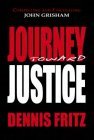
Mr. Williamson, who suffered from psychiatric problems, died in 2004. He is the subject of John Grisham’s book “The Innocent Man.” Mr. Fritz, 58, now lives in Missouri, and has also written a book, “Journey Toward Justice.” Christy Sheppard, a cousin of the murder victim, has become an advocate for the establishment of commissions to look into wrongful convictions.
All of them — the family of Debbie Carter, the family of Mr. Williamson, Mr. Grisham and Mr. Fritz — sat at one table Thursday evening for a dinner benefiting the Innocence Project.
Until an impulse hit Dennis Fritz, and he led his friend Peggy Sanders onto the stage, and they danced where everyone could see them.
Wednesday, January 31, 2007
Information On The Innocence Project and Dennis Fritz
The Innocence Project helped Dennis Fritz's after appeals were denied. He later contacted the Innocence Project for help. It was learned that the physical evidence was going to be tested due to appeals filed by Ron Williamson's lawyers. Fritz filed an injunction to make sure that the evidence would not be totally consumed until the cases were joined with regard to DNA testing.
Dennis Fritz wrote a Book Called "Journey Toward Justice" now on Amazon Here.
Information on The Innocence Project
Innocence Project 100 Fifth Avenue, 3rd Floor New York, 10011
email info@innocenceproject.org phone 212.364.5340
The Innocence Project is not equipped to handle case applications or inquiries by email or over the phone. All case submissions and follow-up correspondence will be handled by mail or overnight delivery services only.
Dennis Fritz wrote a Book Called "Journey Toward Justice" now on Amazon Here.
Information on The Innocence Project
Innocence Project 100 Fifth Avenue, 3rd Floor New York, 10011
email info@innocenceproject.org phone 212.364.5340
The Innocence Project is not equipped to handle case applications or inquiries by email or over the phone. All case submissions and follow-up correspondence will be handled by mail or overnight delivery services only.
About The Innocence Project
The Innocence Project at the Benjamin N. Cardozo School of Law was created by Barry C. Scheck and Peter J. Neufeld in 1992.
It was set up as and remains a non-profit legal clinic. This Project only handles cases where postconviction DNA testing of evidence can yield conclusive proof of innocence. As a clinic, students handle the case work while supervised by a team of attorneys and clinic staff. Most of our clients are poor, forgotten, and have used up all of their legal avenues for relief.
The hope they all have is that biological evidence from their cases still exists and can be subjected to DNA testing. All Innocence Project clients go through an extensive screening process to determine whether or not DNA testing of evidence could prove their claims of innocence.
Thousands currently await our evaluation of their cases.DNA testing has been a major factor in changing the criminal justice system. It has provided scientific proof that our system convicts and sentences innocent people -- and that wrongful convictions are not isolated or rare events.
Most importantly, DNA testing has opened a window into wrongful convictions so that we may study the causes and propose remedies that may minimize the chances that more innocent people are convicted.
As forerunners in the field of wrongful convictions, the Innocence Project has grown to become much more than the "court of last resort" for inmates who have exhausted their appeals and their means.
We are now helping to organize The Innocence Network, a group of law schools, journalism schools, and public defender offices across the country that assists inmates trying to prove their innocence whether or not the cases involve biological evidence which can be subjected to DNA testing.
We consult with legislators and law enforcement officials on the state, local, and federal level, conduct research and training, produce scholarship, and propose a wide range of remedies to prevent wrongful convictions while continuing our work to free innocent inmates through the use of postconviction DNA testing. We hope that this site will raise awareness and concern about the failings of our criminal justice system.
It is a facet of our society that eventually touches all of its citizens. The prospect of innocents languishing in jail or, worse, being put to death for crimes that they did not commit should be intolerable to every American, regardless of race, politics, sex, origin, or creed.Innocence Project
100 Fifth Avenue, 3rd Floor New York, NY 10011
info@innocenceproject.org phone 212.364.5340
The Innocence Project is not equipped to handle case applications or inquiries by email or over the phone. All case submissions and follow-up correspondence will be handled by mail or overnight delivery services only. If you are seeking legal assistance, read guidelines for submitting your case. Fritz's appeals were denied. He later contacted the Innocence Project for help. It was learned that the physical evidence was going to be tested due to appeals filed by Ron Williamson's lawyers. Fritz filed an injunction to make sure that the evidence would not be totally consumed until the cases were joined with regard to DNA testing.
It was set up as and remains a non-profit legal clinic. This Project only handles cases where postconviction DNA testing of evidence can yield conclusive proof of innocence. As a clinic, students handle the case work while supervised by a team of attorneys and clinic staff. Most of our clients are poor, forgotten, and have used up all of their legal avenues for relief.
The hope they all have is that biological evidence from their cases still exists and can be subjected to DNA testing. All Innocence Project clients go through an extensive screening process to determine whether or not DNA testing of evidence could prove their claims of innocence.
Thousands currently await our evaluation of their cases.DNA testing has been a major factor in changing the criminal justice system. It has provided scientific proof that our system convicts and sentences innocent people -- and that wrongful convictions are not isolated or rare events.
Most importantly, DNA testing has opened a window into wrongful convictions so that we may study the causes and propose remedies that may minimize the chances that more innocent people are convicted.
As forerunners in the field of wrongful convictions, the Innocence Project has grown to become much more than the "court of last resort" for inmates who have exhausted their appeals and their means.
We are now helping to organize The Innocence Network, a group of law schools, journalism schools, and public defender offices across the country that assists inmates trying to prove their innocence whether or not the cases involve biological evidence which can be subjected to DNA testing.
We consult with legislators and law enforcement officials on the state, local, and federal level, conduct research and training, produce scholarship, and propose a wide range of remedies to prevent wrongful convictions while continuing our work to free innocent inmates through the use of postconviction DNA testing. We hope that this site will raise awareness and concern about the failings of our criminal justice system.
It is a facet of our society that eventually touches all of its citizens. The prospect of innocents languishing in jail or, worse, being put to death for crimes that they did not commit should be intolerable to every American, regardless of race, politics, sex, origin, or creed.Innocence Project
100 Fifth Avenue, 3rd Floor New York, NY 10011
info@innocenceproject.org phone 212.364.5340
The Innocence Project is not equipped to handle case applications or inquiries by email or over the phone. All case submissions and follow-up correspondence will be handled by mail or overnight delivery services only. If you are seeking legal assistance, read guidelines for submitting your case. Fritz's appeals were denied. He later contacted the Innocence Project for help. It was learned that the physical evidence was going to be tested due to appeals filed by Ron Williamson's lawyers. Fritz filed an injunction to make sure that the evidence would not be totally consumed until the cases were joined with regard to DNA testing.
Subscribe to:
Posts (Atom)